

Planning a corporate team building event often feels overwhelming. Between coordinating schedules, managing budgets, and choosing activities that won’t make half your team groan, the pressure is real. Yet companies that invest in regular team building see 36% higher employee retention rates compared to those that don’t. The effort pays off.
Quick Answer: 7 Steps to Plan a Corporate Team Building Event
- Define objectives – communication, trust, morale improvement
- Set budget – $50-150 per person average
- Plan timeline – 4-6 weeks for under 100 people
- Choose activities – match team interests and fitness levels
- Select venue – accessible, appropriate capacity
- Handle logistics – transport, food, equipment, safety
- Measure results – post-event surveys and feedback
Detailed breakdown below.
Define Clear Event Objectives

Every successful team building event starts with a specific goal. Vague intentions like “improve teamwork” won’t cut it. You need measurable objectives.
Focus on concrete outcomes: strengthen interdepartmental communication, rebuild trust after organizational changes, integrate new hires faster, or enhance problem-solving under pressure. Research shows teams participating in targeted activities experience 25% improvement in overall performance when objectives align with actual business challenges.
Understanding your team’s current pain points drives better activity selection. If communication breakdowns plague your projects, prioritize collaborative challenges. If trust is lacking, choose activities requiring mutual dependence. When you’re clear on what types of corporate events align with your goals, planning becomes significantly easier.
Set Your Budget and Timeline
Budget Breakdown
Corporate team building costs vary widely based on group size, location, and activity complexity. Here’s a realistic breakdown:
| Budget Item | Cost Range | Notes |
|---|---|---|
| Venue rental | $500-3,000 | Desert locations often include facilities |
| Activities/facilitation | $30-100 per person | Professional facilitators add value |
| Catering | $20-60 per person | Consider dietary restrictions |
| Transportation | $15-40 per person | Essential for off-site events |
| Materials/equipment | $200-1,000 | Varies by activity type |
Most companies budget $50-150 per employee for quality team building experiences. Desert safari corporate packages in Dubai typically fall within this range while offering unique value.
Planning Timeline
Timing directly impacts success. Event planning experts recommend:
- 4-6 weeks minimum for events under 100 people
- 4-6 months for larger events requiring extensive coordination or travel
Starting early allows you to secure preferred venues, coordinate schedules across departments, and build anticipation. Rush planning leads to compromised choices and lower participation rates.
Choose Team-Appropriate Activities

Activity Categories
The wrong activity selection kills engagement before events begin. Your choices must accommodate different personalities, fitness levels, and interests.
Indoor options work well for skill-focused development: escape rooms build problem-solving abilities, workshops enhance specific competencies, game show formats create friendly competition without physical demands.
Outdoor activities excel at breaking down barriers and building authentic connections. Physical challenges in natural settings push people outside comfort zones while leveling hierarchies that exist in office environments.
Outdoor Team Building in Dubai
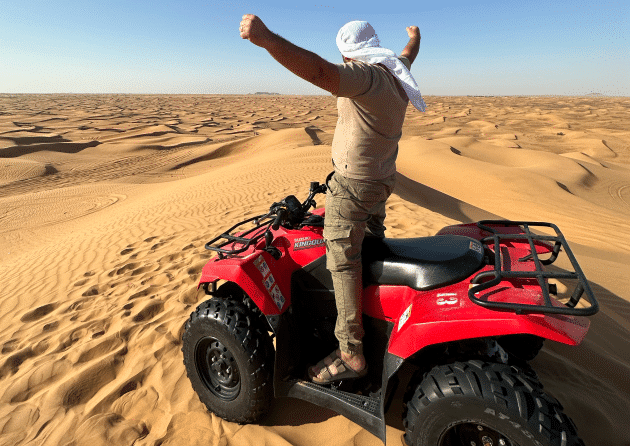
Dubai’s desert landscape offers exceptional corporate team building opportunities. Evening desert safaris combine adventure with relationship building in ways conference rooms cannot replicate.
Dune bashing requires teams to trust drivers and each other through shared adrenaline experiences. Traditional Bedouin camp settings facilitate informal conversations that build genuine connections. Activities like sandboarding and camel riding accommodate varying fitness levels while maintaining engagement.
The evening format provides natural advantages: cooler temperatures, stunning sunset backdrops for photos, and built-in transition from high-energy activities to relaxed dinner conversations. Teams return energized rather than exhausted. When you organize corporate events in unique environments, participation and enthusiasm increase measurably.
Select the Right Venue
Venue selection shapes the entire experience. Consider these critical factors:
- Accessibility – Can all team members reach the location? Are there mobility accommodations?
- Capacity – Does the space comfortably fit your group size plus equipment?
- Amenities – Restrooms, shade, power sources, WiFi (if needed)
- Weather backup – Indoor alternatives or covered areas for outdoor venues
- Ambiance – Does the setting match your objectives and company culture?
Dubai desert venues excel because they provide complete packages: transportation, facilities, catering, and activities in one booking. This simplifies logistics while delivering memorable experiences that strengthen team bonds through shared adventure.
Plan Critical Logistics

Details determine whether events run smoothly or become frustrating disasters. Address these logistics early:
- Transportation coordination – Company-provided shuttles vs. individual arrival, parking availability, pickup/drop-off timing
- Food and beverage – Dietary restrictions, meal timing, hydration for outdoor events, cultural considerations
- Equipment and materials – Who provides what, backup supplies, safety gear
- Safety protocols – First aid availability, emergency contacts, activity risk assessments
- Communication plan – How you’ll share agenda, answer questions, send reminders
- Contingency plans – Weather alternatives, vendor cancellations, lower-than-expected attendance
Creating a detailed checklist prevents last-minute scrambling. Distribute it to your planning team with clear ownership for each item.
Promote and Execute Your Event
Internal Promotion
Building excitement before the event increases participation and engagement. Start communication 2-3 weeks in advance.
Share the agenda with specific details: arrival times, activity descriptions, what to wear, what’s provided. Answer the question “What’s in it for me?” by connecting activities to benefits employees actually care about.
Leadership endorsement matters. When executives participate enthusiastically, attendance and engagement spike. Make expectations clear, especially regarding mandatory vs. optional attendance, but emphasize the fun and value.
Day-of Execution
Your detailed checklist becomes your lifeline on event day. Arrive early to verify everything is set up correctly.
Designate team members for specific roles: registration, photography, activity facilitation, problem-solving. Brief them thoroughly beforehand.
Stay flexible. Despite perfect planning, issues arise. Your ability to adapt calmly determines how participants experience minor hiccups. Focus on creating positive moments rather than perfect execution.
Measure Success and Gather Feedback
Team building investments require accountability. Measure results to justify costs and improve future events.
Send post-event surveys within 48 hours while experiences remain fresh. Ask specific questions: What activities were most valuable? What would you change? How has communication with colleagues improved? Rate overall satisfaction.
Track measurable outcomes over the following weeks: project collaboration quality, interdepartmental communication frequency, employee engagement scores. Studies show 75% of employees report improved peer communication after participating in team building activities.
Apply insights systematically. If outdoor activities scored highest, prioritize them next time. If certain activities fell flat, replace them. Continuous improvement turns occasional events into powerful culture-building tools.
Top Corporate Team Building Ideas for 2026

Looking for specific activities? These formats consistently deliver strong results:
- Desert safari adventures – Combines physical challenges, cultural experiences, and relationship building in Dubai’s unique landscape
- Outdoor scavenger hunts – Strategic planning meets problem-solving across city landmarks or natural settings
- CSR community projects – Build homes, pack food donations, or support local causes while strengthening team bonds
- Escape room challenges – Intense collaboration under time pressure develops communication and creative thinking
- Sports tournaments – Pickleball, volleyball, or multi-sport competitions create healthy competition and camaraderie
The best corporate events mix different activity types to engage diverse personalities and learning styles.